Our platform, NOVA, enables rapid development and validation of algorithmic trading strategies through the use of highly configurable and composable models and rigorous backtesting and simulation.
Doomsun's systematic trading platform used to develop, test, deploy and manage strategies.
Reusable alpha and risk models, stateless and composing through defined interfaces. Portfolio and execution behavior is declarative configuration, stored as data and versioned over time.
An accumulate-only store. Every decision traces back to the data and model state that produced it, which is what makes a result reproducible a year later.
A structured surface for an agent to work against rather than a codebase to modify, so the platform absorbs advances in AI-assisted research as they arrive.

Durable edge comes from the process that produces strategies, not from any one of them. Strategies emit probabilistic forecasts rather than buy/sell calls; those forecasts are scored for calibration, and capital follows the score. Individual strategies do not have to be regime-aware — only the scoring and allocation layer does.
Rotates back when the regime turns in its favor

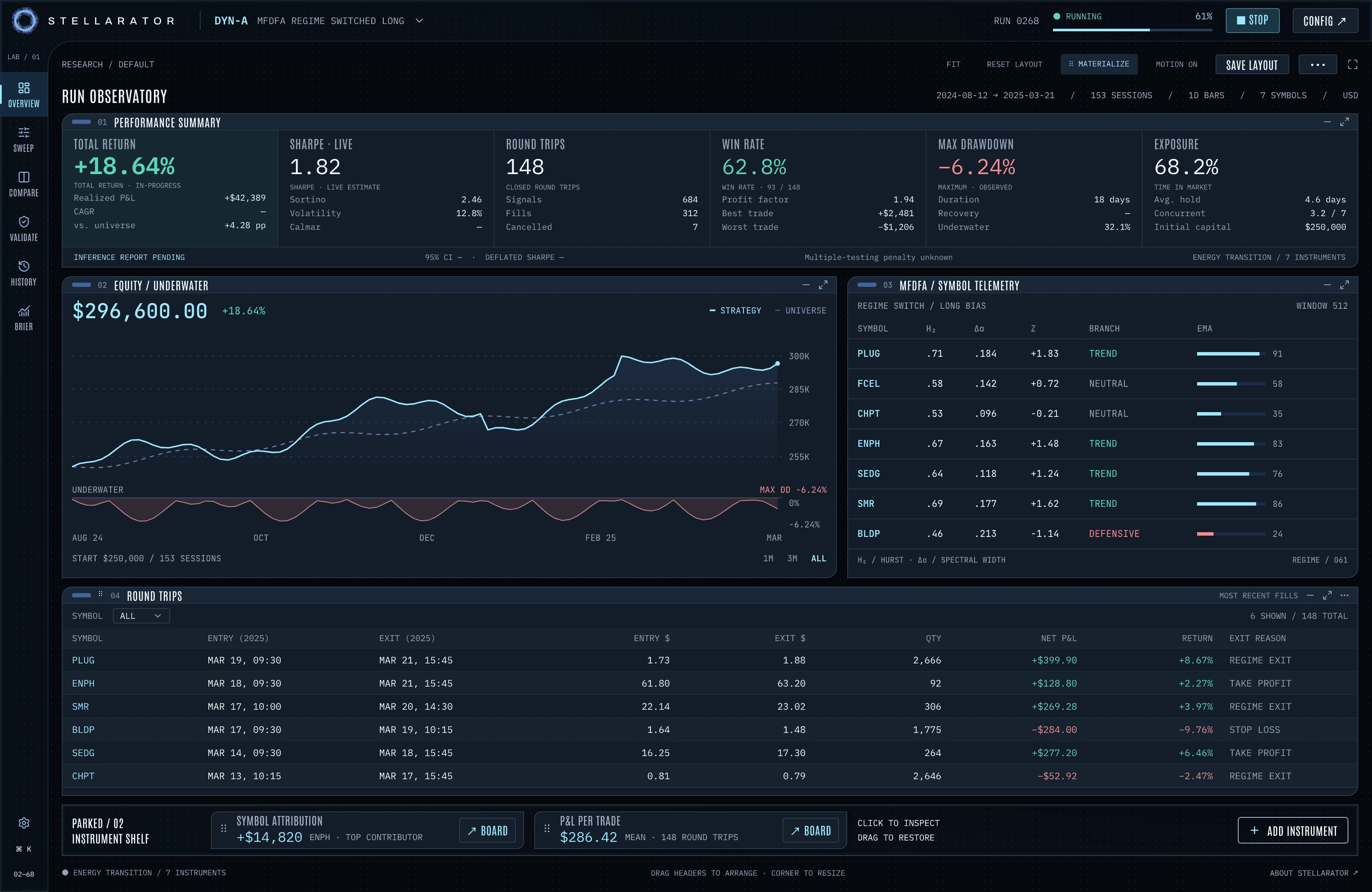
Validation, before a strategy touches capital. Production-grade execution simulation and the statistical machinery that says whether a backtest means anything — in one codebase, enforced by the platform rather than assembled by the user.
Strategies run in-situ, through the same path they take in production, with portfolio-level allocation and execution simulation covering slippage, partial fills and market impact.
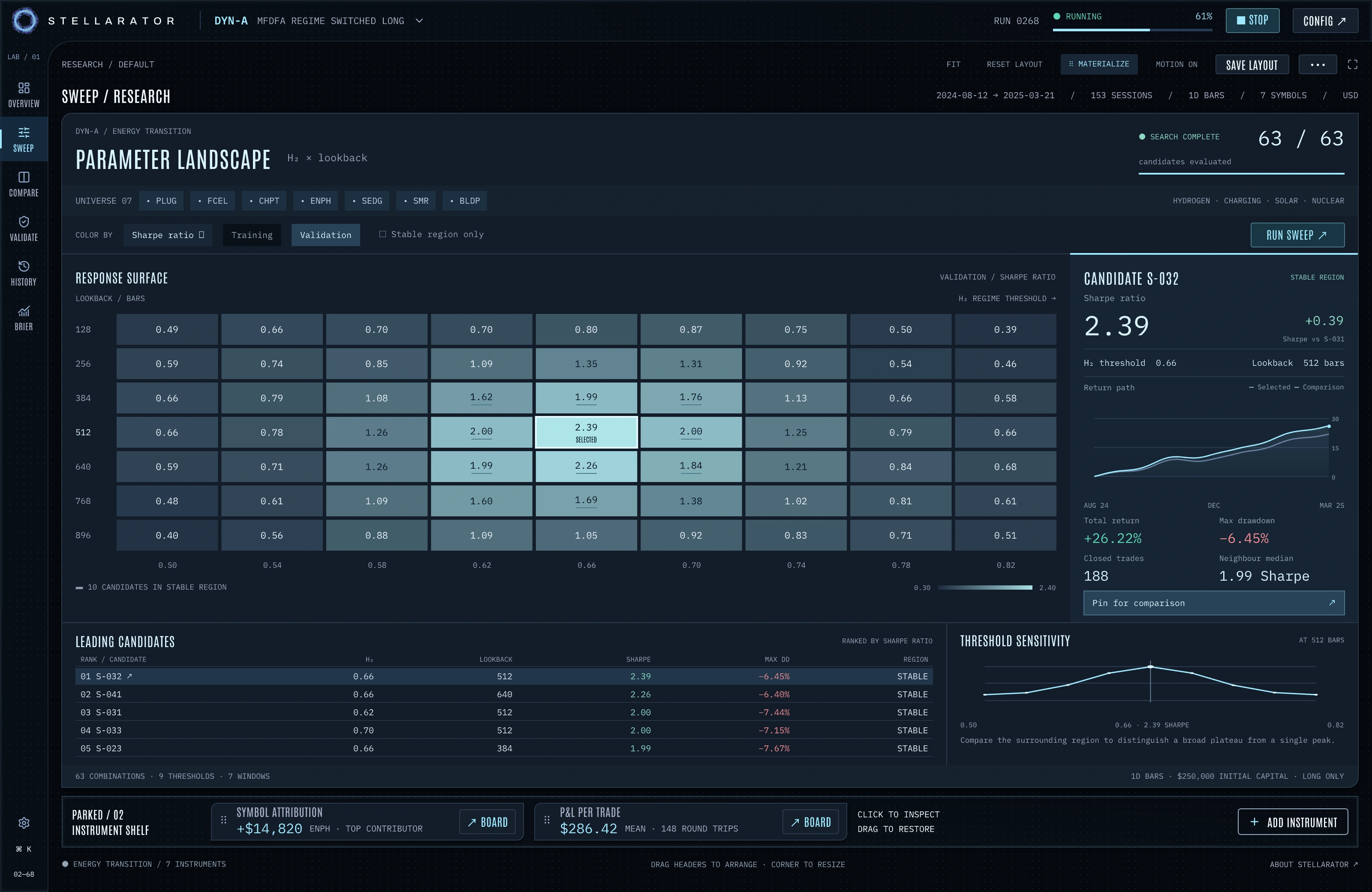
History happened once. Test enough variants against one path and some will look significant by chance. The corrections for that ship as platform features rather than as an exercise for the user.
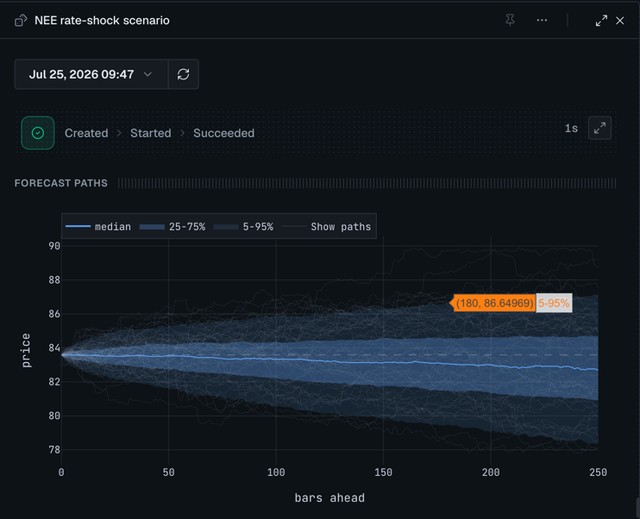
Forward simulation completes the picture: synthetic data calibrated to real structure, preserving the volatility clustering and fat tails that geometric Brownian motion cannot produce.

“Is this strategy still working?” is a lagging question — by the time returns answer it, the regime has already turned. Daylight asks what the market is currently capable of.
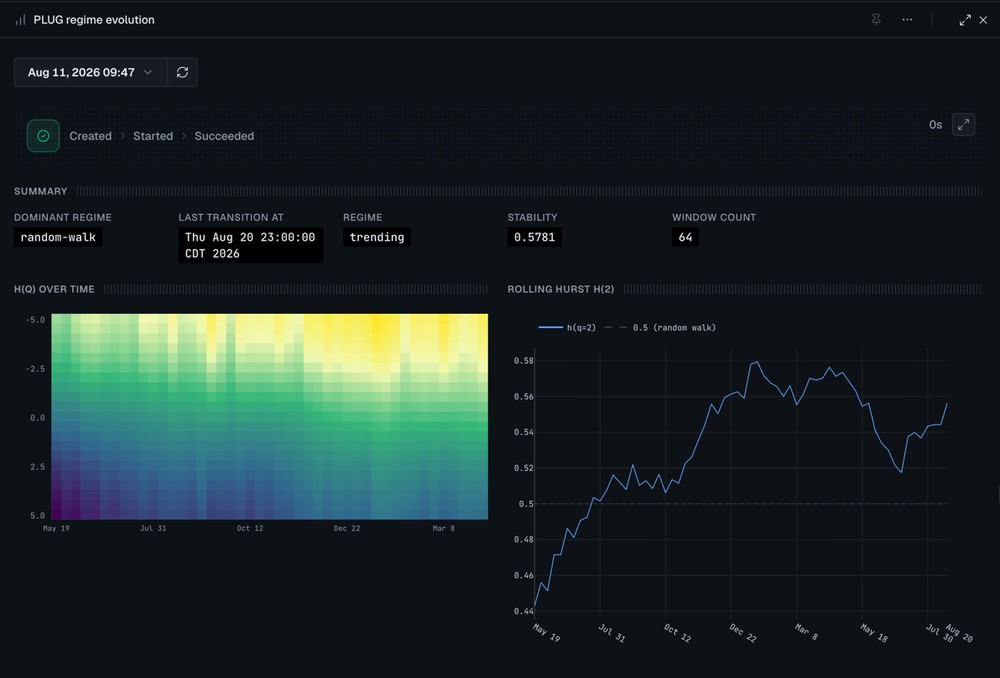
Multifractal analysis measures persistence, regime transitions, and directional asymmetry across timescales. Kinematics treats that structure as a trajectory rather than a snapshot, making the rate and direction of structural change the signal — comparable tools report a point value, this reports where it is heading.
An ML framework holding temporal context across price action, structural features, and cross-market signals. Structure feeds in as conditioning context, so one price pattern reads differently in a trending regime than in a chaotic one. Output is calibrated intervals, not point estimates.
Synthetic market data calibrated to a real market’s measured structure, preserving the volatility clustering and fat tails standard Monte Carlo cannot produce. Stellarator stress-tests strategies against those paths rather than the single one that happened.
Decades of experience in distributed systems, financial infrastructure, and algorithmic trading.

20+ years building distributed systems and fintech infrastructure

20+ years in consulting and fintech systems architecture